Artist’s Statement
The Pitch
Grounded in disability studies and embodied cognition, my practice challenges the notion that bodies and minds must conform to a fixed standard. I approach the body as a site of meaning shaped through lived, sensory experience, reframing dysfunction as variation rather than failure and encouraging broader understandings of identity, perception, and expression.
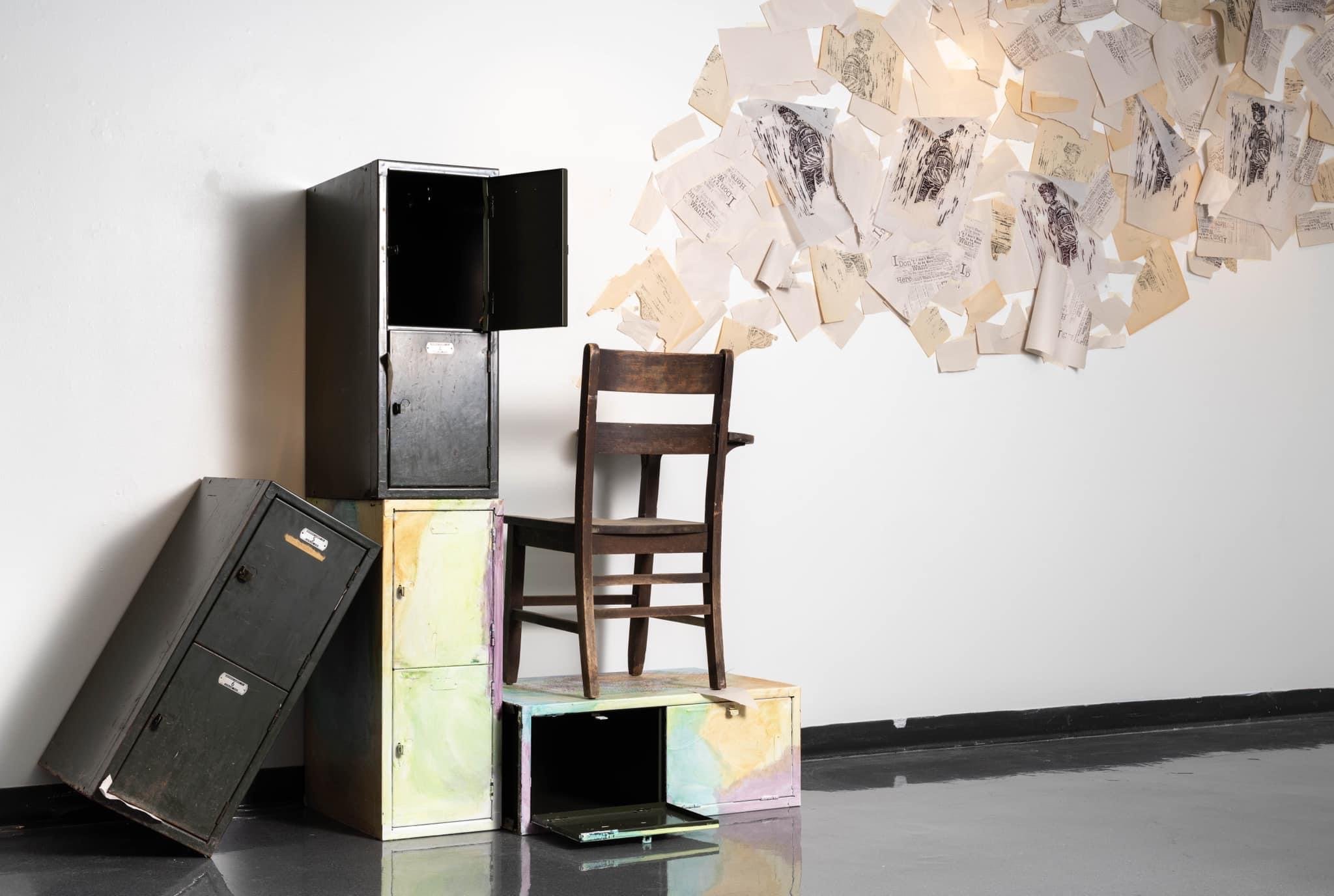
My work explores mental health, sensory overload, and the ways internal experiences shape communication and daily life. Through sculpture, installation, and animation, I use materials such as rope cord, plaster gauze, and repurposed bedding to translate invisible psychological states into physical form. Rope cord suggests tension and restriction, plaster gauze evokes fragility while referencing skin and protection, and bedding embodies both comfort and confinement. Recurring platelet forms act as a visual language for internal struggle, making hidden biological and emotional processes tangible while expressing empathy, pain, and resilience beyond the limits of language.
Experimentation and material transformation are central to my process. I allow forms and ideas to evolve, reflecting the fluid nature of identity, perception, and personal growth. Digital scanning, photogrammetry, 3D printing, and CNC routing enable me to translate physical forms into data and back again, embracing distortion and information loss as metaphors for fragmented memory, emotion, and perception.
Through layered materials, color, and spatial installation, I create environments that evoke sensory intensity and invite viewers to engage with embodied experience. By making internal experiences visible, my practice fosters empathy, contributes to conversations surrounding disability, neurodiversity, and embodiment, and challenges assumptions about what it means for a body or mind to function "normally."