The Line Patchwork Project is an introductory 2-D Design Foundations assignment that asks students to explore one of the most fundamental elements of art: line.
Rather than treating line simply as a tool for outlining shapes or creating recognizable images, this project encourages students to consider how line can communicate movement, energy, emotion, and relationships within a composition. Students create an abstract artwork based on a selected emotion while experimenting with line quality, direction, orientation, continuity, figure-ground relationships, actual line, and implied line.

Charley Bennight
Missouri State University, Springfield, MO.
ART 100 | 2-D Design Foundations
Spring 2023
Emotion - Shock
A major goal of the project is getting students to think about how something as simple as a line can change depending on how it is used. A thick, jagged diagonal line might communicate something completely different from a thin, slowly curving line. Similarly, lines that overlap, repeat, cluster together, or move aggressively across a composition can create very different visual experiences. Students are encouraged to think about these relationships while considering how the Principles of Design can help organize their compositions. The original project objectives emphasize developing this understanding while also strengthening students' ability to analyze, create, and discuss artwork using appropriate art vocabulary.
How the Project Operates
The project begins with students selecting an emotion they want to communicate. Instead of immediately beginning the final artwork, students first brainstorm and create several preliminary sketches. This allows them to explore different possibilities without becoming overly attached to their first idea. The sketching process encourages experimentation with different line weights, orientations, directions, and compositional arrangements before students begin working at a larger scale.
Students then begin creating physical lines from Bristol paper. These lines are drawn and carefully cut out so they can function as movable pieces within the composition. This creates the "patchwork" aspect of the project. Rather than immediately gluing the pieces down, students arrange, rearrange, rotate, overlap, add, and remove lines while searching for a composition that effectively communicates their chosen emotion.
An important part of this stage is documentation and experimentation. Students photograph the different arrangements they create before committing to a final design. The project specifically asks students to remain open to change and try several arrangements before permanently attaching anything. This transforms composition into an active process of decision-making rather than something that has to be perfectly planned from the beginning.
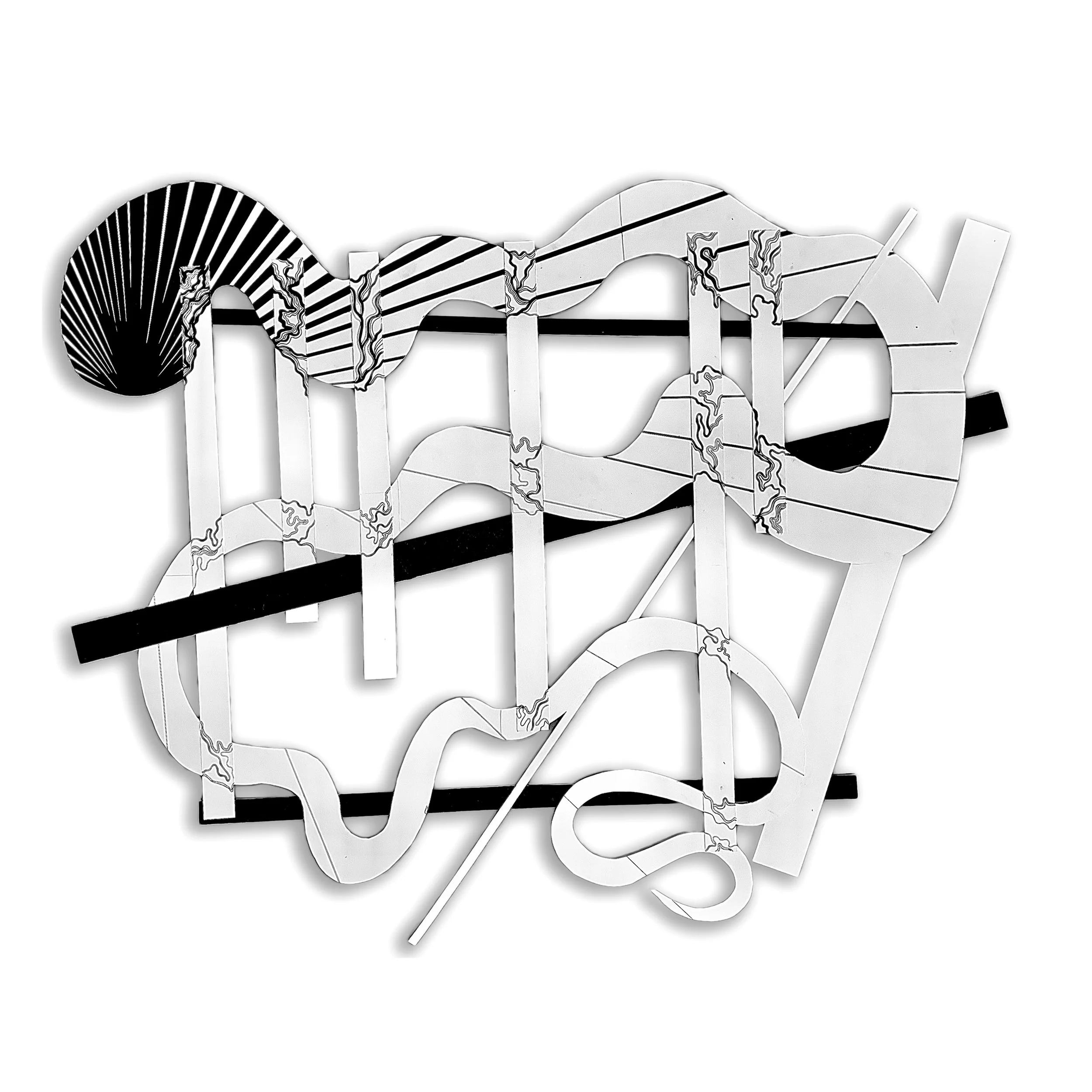
Emily Clark
Missouri State University, Springfield, MO.
ART 100 | 2-D Design Foundations
Spring 2023
Emotion - Disheartened
Once students settle on an arrangement, the paper elements are attached using rubber cement. The project then moves into another layer of exploration as students introduce drawn linear elements into the existing patchwork. They sketch possibilities, lightly map those ideas onto the composition in pencil, and eventually develop them using ink. The drawn lines are not simply decorative additions. They should interact with the cut-paper elements by continuing movement, interrupting patterns, connecting areas, establishing rhythm, or creating new visual relationships.
This combination of cut, arranged, and drawn lines allows the project to operate somewhere between drawing and collage. Students are not only making marks on a surface but physically manipulating line as a design element. A line can be picked up, moved, rotated, overlapped, removed, and reconsidered before becoming permanent. That physical process helps reinforce the idea that composition develops through experimentation.
From Emotion to Abstraction
Perhaps the most important challenge of the Line Patchwork Project is communicating emotion without relying on recognizable imagery. The purpose of the assignment is specifically to create an abstract composition that uses the formal qualities of line to depict an emotion.
If a student chooses anxiety, for example, they do not need to draw a person who looks anxious. Instead, they might consider what anxiety could look like as a visual system. Lines might repeatedly intersect, become increasingly dense, abruptly change direction, or create areas of uncomfortable visual tension. A student exploring calmness might make completely different decisions involving repetition, spacing, continuity, and gradual movement.
There is no single correct visual solution. What matters is whether students can make intentional choices and explain how those choices relate to their selected emotion.
The project ultimately introduces students to a larger idea that will continue throughout 2-D Design: formal elements carry meaning. Line is not neutral. Its thickness, direction, placement, repetition, interruption, and relationship to surrounding space all influence how a viewer experiences an artwork.
By the end of the project, students have moved through brainstorming, sketching, cutting, arranging, photographing, revising, adhering, drawing, inking, and evaluating. The finished Line Patchwork becomes more than an exercise in making different kinds of lines. It becomes an opportunity for students to experience design as an evolving process of experimentation, reflection, revision, and intentional visual decision-making.
A sample PDF outlining the Line Patchwork Project is provided below.
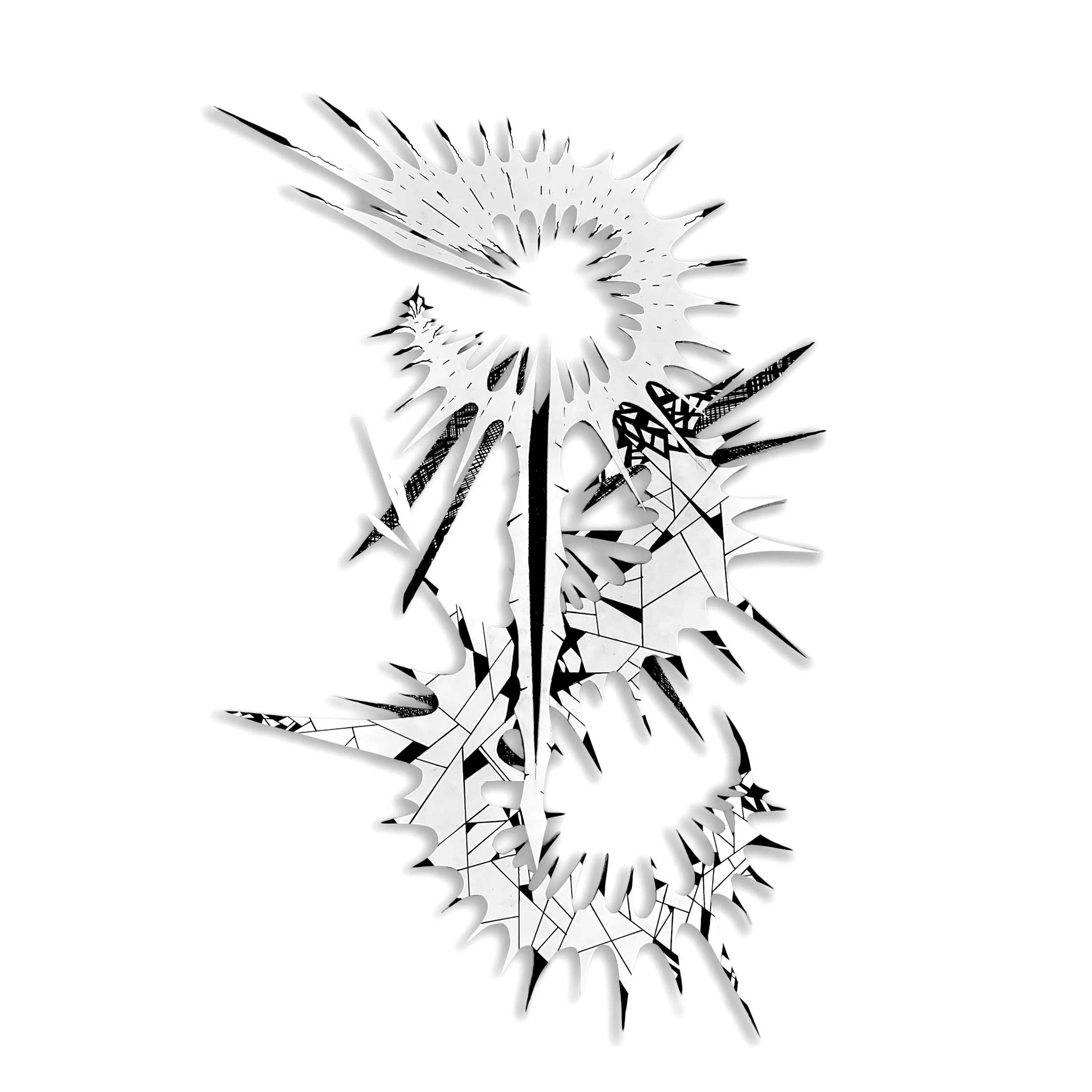
River Wise
Missouri State University, Springfield, MO.
ART 100 | 2-D Design Foundations | Spring 2023
Emotion - Horrified
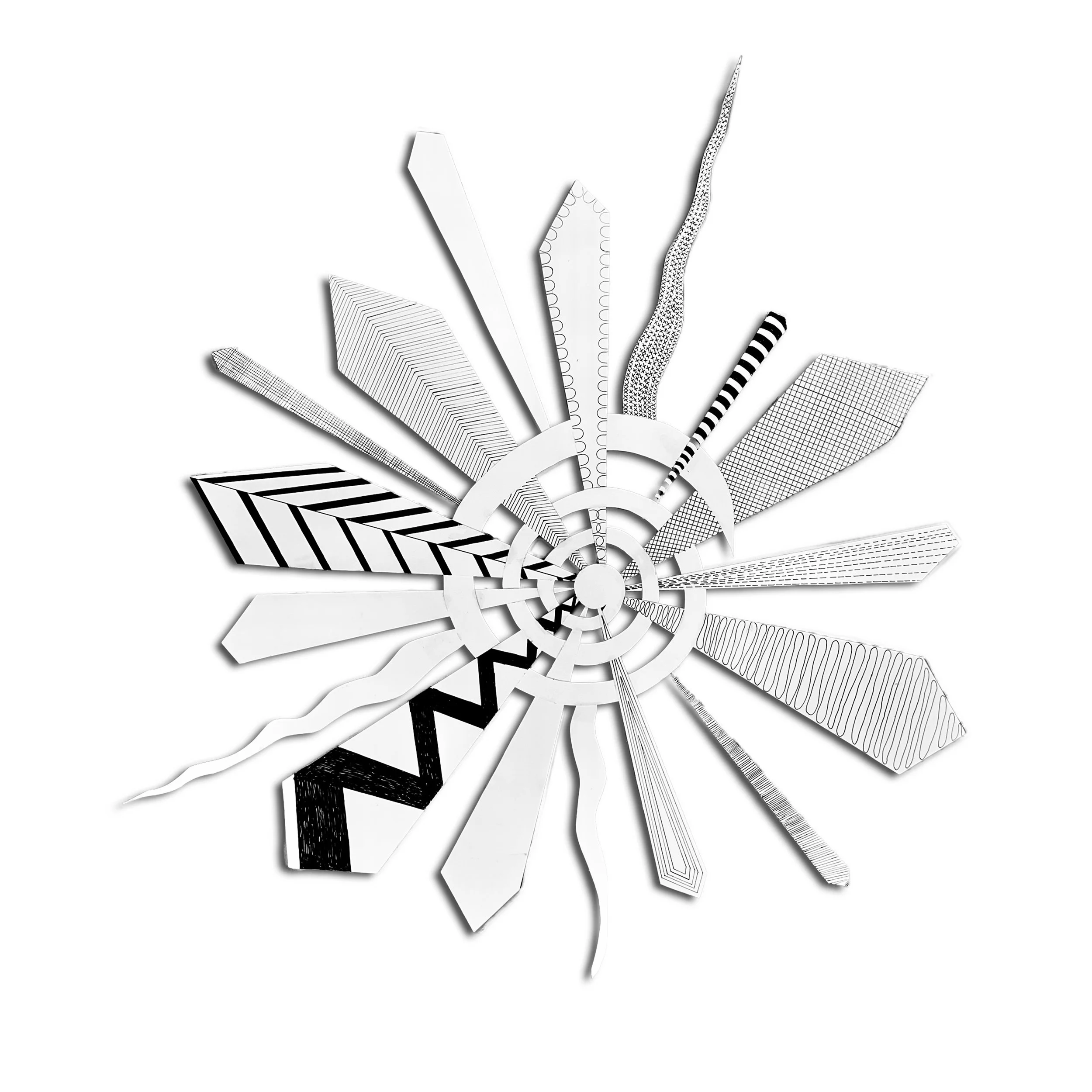
Jeanne Welch Kurdle
Missouri State University, Springfield, MO.
ART 100 | 2-D Design Foundations | Spring 2023
Emotion - Energized