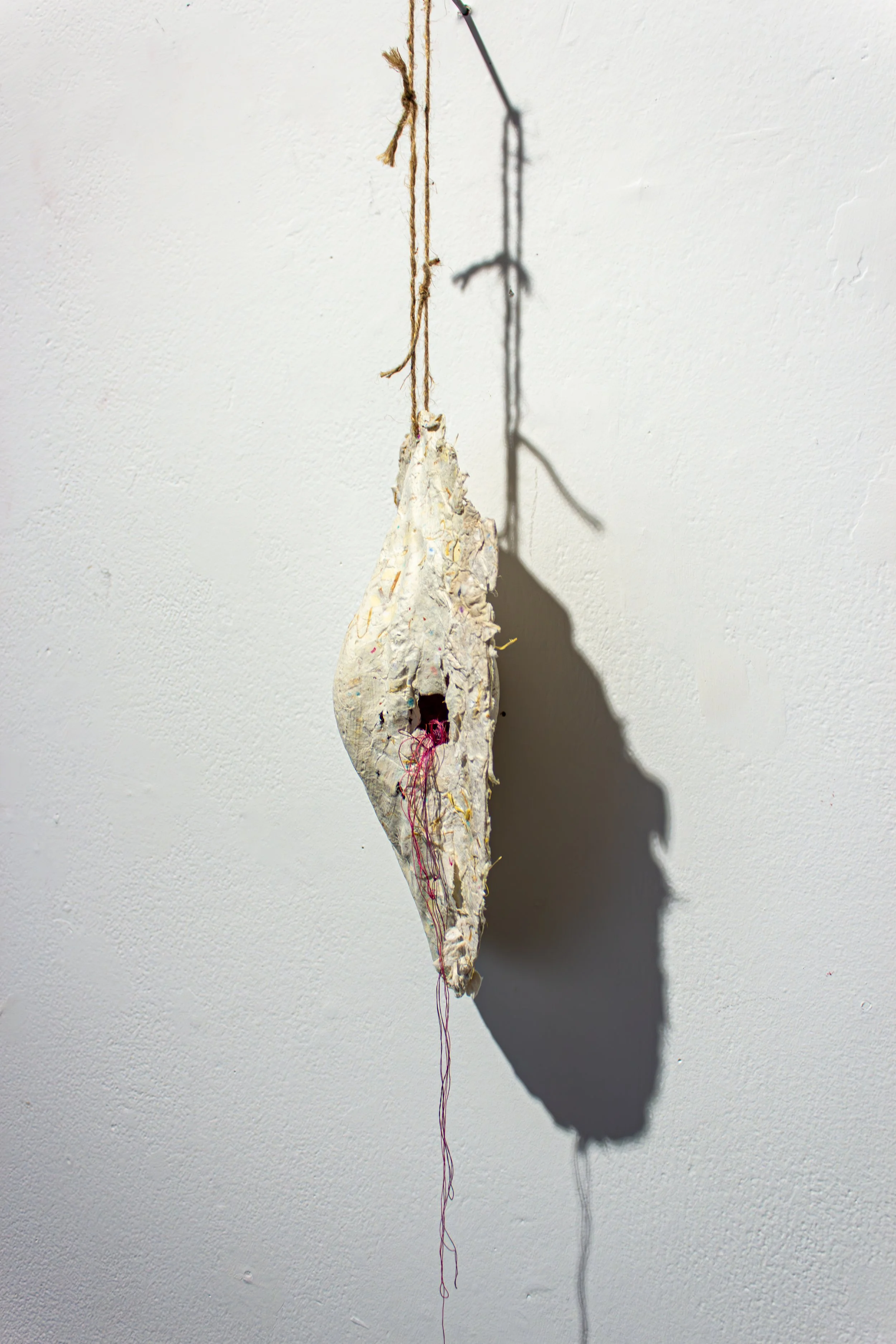
Bloodletting the Soul
Bloodletting the Soul is a sculptural work from my ongoing series, Bodily Dysfunction, which investigates the relationship between mental health, sensory experience, and the body. Throughout the series, I explore how invisible psychological and neurological experiences can be translated into physical form through material experimentation. While previous works have incorporated plaster, digital fabrication, and medical imagery, this piece marks an important shift in my practice through the introduction of handmade paper as a sculptural medium.
The title references the historical practice of bloodletting, once believed to restore balance by releasing excess blood from the body. Here, that act becomes a metaphor for emotional release. Rather than draining the body of illness, Bloodletting the Soul suggests the release of grief, anxiety, and psychological burden. The work considers what it means to externalize emotions that often remain hidden, presenting vulnerability not as weakness but as an essential act of healing.
Bloodletting the Soul
Cast Paper Pulp and Dyed Thread
Ryan Dee Nevill
Spring 2026
By combining digital modeling, 3D printing, plaster mold making, and handmade paper, Bloodletting the Soul expands the material language of the series while continuing its exploration of the body's hidden structures and the emotional realities they can represent. Through this process, the work transforms an anatomical form into a quiet reflection on vulnerability, healing, and the necessity of release.
Click the button to see more works within the Bodily Dysfunction Series.
The sculpture takes inspiration from the anatomy of the human body, specifically the calf muscle. Beginning with a digitally modeled form based on the gastrocnemius muscle, I 3D printed the model to create a positive that could then be cast into a plaster mold. Instead of reproducing the form in a traditional sculptural material, I used the mold as a vessel for handmade paper. This allowed the paper pulp to conform to the contours of the mold, preserving subtle anatomical details while transforming them into a lightweight, organic form that feels both bodily and fragile.
Learning the process of papermaking became one of the most rewarding aspects of creating this piece. I found the material's unpredictability and responsiveness incredibly exciting, particularly its ability to record texture, pressure, and gesture within each layer of pulp. Combining papermaking with plaster mold making revealed sculptural possibilities I had not previously considered, opening a new direction within my practice. The process itself became just as important as the finished object, encouraging me to think about paper not simply as a surface, but as a sculptural material capable of existing somewhere between skin, anatomy, and artifact.
A small opening interrupts the enclosed form, allowing strands of pink thread to emerge and extend downward. The thread functions as both a literal and symbolic release, recalling exposed muscle fibers, nerves, veins, or even flowing blood while representing the emotional act of letting go. Suspended from coarse rope, the work occupies a space between a medical specimen and a personal relic, reinforcing the dialogue between clinical observation and lived experience that defines Bodily Dysfunction.